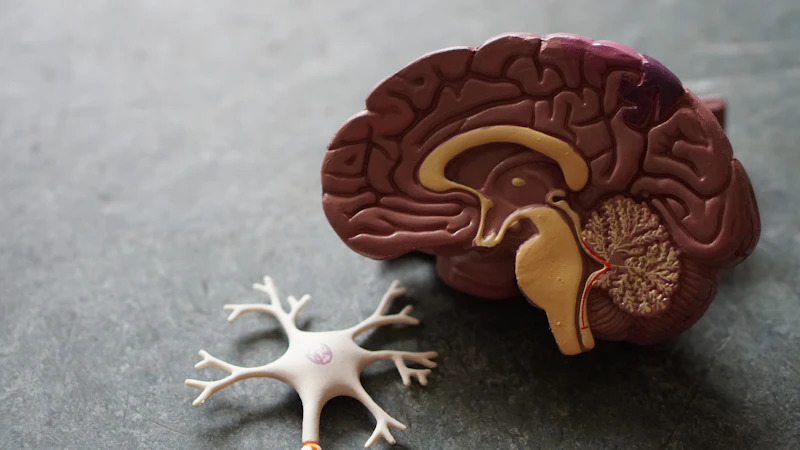
What Is Neuromarketing?
Neuromarketing applies the tools and findings of neuroscience to understand how people respond to marketing stimuli. In clinical settings, this involves EEG readings, fMRI scans, eye-tracking, and biometric measurements. In applied digital marketing, it means leveraging what that research has already revealed — about attention, emotion, memory, and decision-making — to design more effective content, interfaces, and campaigns.
The core premise is that most purchase decisions are not primarily rational. The conscious, reasoning mind narrates decisions after the fact; the actual decision is largely driven by faster, emotionally-loaded processes happening below the surface. Effective digital marketing speaks to both layers — but especially to the layer that acts first.
Why Neuromarketing Is Increasingly Relevant in Digital
The digital environment is uniquely suited to neuromarketing principles, for two reasons.
First, digital is measurable at a granular level that traditional media never allowed. Where a print ad gave you circulation numbers, a landing page gives you scroll depth, time on element, mouse movement heatmaps, and conversion rates by variant. Every behavioral signal is a data point about how the brain is responding. A/B testing, at its most sophisticated, is applied behavioral psychology.
Second, the digital attention economy has intensified the competition for cognitive resources. Users make micro-decisions about whether to continue engaging with a page in under 100 milliseconds. The stimuli that win those micro-decisions — and the ones that lose — are governed by neurological principles that have nothing to do with the logical quality of your argument.
Core Neuromarketing Principles Applied to Digital
Cognitive Load and the Paradox of Simplicity
The brain is an energy-conserving organ. When processing a webpage requires significant cognitive effort — to parse the navigation, interpret the hierarchy, or figure out what action to take — users exit. Not because the content is bad, but because the processing cost felt too high.
This is why top-performing landing pages are often surprisingly simple. Fewer choices. Cleaner layouts. One primary call to action. Each element you remove from a page is one less decision the brain has to make. The reduction in cognitive load translates directly into higher engagement and conversion.
The implication for digital strategy: complexity is a conversion killer. This applies to information architecture, copywriting, email design, and ad creative equally.
The Power of Visual Hierarchy
Eye-tracking studies consistently show that human attention on digital screens is not evenly distributed. There are predictable patterns — the F-pattern for text-heavy pages, the Z-pattern for visual layouts — and highly reliable fixation points: the top-left, large images, human faces, and anything that breaks the visual pattern around it.
Effective digital design works with these patterns rather than against them. The most important message, the primary CTA, the brand differentiator — these belong in the zones where attention naturally lands, not in the corners where it drifts.
A practical audit question: if you traced the eye path of a first-time visitor through your homepage, what would they see, in what order, and what would they miss entirely?
Emotional Priming and Memory Encoding
Information attached to an emotional response is encoded in memory more deeply than neutral information. This is fundamental to how the brain prioritizes what to retain. It's also why storytelling in marketing isn't a soft creative preference — it's a neurologically grounded strategy for making your brand stick.
In digital content, emotional priming manifests in several ways: the framing of headlines (loss aversion is a more powerful motivator than equivalent gain), the use of narrative structure in case studies and testimonials, the selection of imagery that mirrors the emotional state of the target reader, and the tone of voice across touchpoints.
Brands that consistently evoke a specific emotional register — confidence, curiosity, belonging, urgency — are leveraging the brain's tendency to associate those feelings with the brand that triggered them.
Social Proof and the Tribal Brain
Humans are social animals whose brains are wired to look to others for behavioral cues, especially in novel or uncertain situations. This is the neurological basis of social proof — the mechanism behind reviews, testimonials, case studies, user counts, and media badges.
Online, uncertainty is the default. A visitor on your site for the first time has no prior experience with you. Social proof reduces the perceived risk of engaging — it tells the brain "other people have done this and it worked out." The more specific and credible the social proof, the stronger the effect.
The detail matters here. "Trusted by thousands" is weaker than "143 agencies across 14 countries use this." Named testimonials with photos outperform anonymous quotes. Results-focused case studies outperform general endorsements. The brain rewards specificity because specificity reads as verifiable, and verifiable information reduces threat response.
Scarcity, Urgency, and the Loss Aversion Reflex
Behavioral economists Daniel Kahneman and Amos Tversky demonstrated that people feel the pain of loss approximately twice as intensely as they feel the pleasure of equivalent gain. This asymmetry — loss aversion — is one of the most reliably reproducible findings in behavioral science, and it has direct applications in digital marketing.
Scarcity messaging ("only 3 spots remaining"), time-bounded offers, and framing options in terms of what will be missed rather than what will be gained all activate this reflex. Used honestly, these are legitimate tools for converting genuine intent into action. Used manipulatively — fake countdown timers, fabricated stock counts — they erode trust the moment users recognize the pattern, which they increasingly do.
The ethical application of loss aversion focuses on making real constraints visible: genuine deadlines, actual availability limits, real opportunity costs of inaction.
Neuromarketing in SEO Content
The principles above aren't just for landing pages and ad creative. They apply directly to SEO content strategy.
Headlines that trigger curiosity gaps outperform descriptive headlines in CTR. The brain is motivated to close gaps in knowledge — a headline that opens a question the reader doesn't have an answer to creates a pull toward the click.
Above-the-fold content that signals relevance immediately reduces bounce rates. The brain's threat assessment happens fast; a user needs to see within seconds that the page will give them what they came for.
Content structure that reduces reading friction — clear H2s, short paragraphs, visual breaks, bullet points for list-formatted information — reduces cognitive load and increases the likelihood users reach your CTA.
Emotional resonance in E-E-A-T signals matters too. Expertise and authority aren't just logical assessments; they're emotional ones. A page that *feels* trustworthy — through the quality of its writing, the specificity of its claims, the credibility of its sources — activates trust responses that a technically optimized page with thin prose simply doesn't.
Applying This to Your Digital Strategy
The bridge from neuromarketing theory to digital practice is shorter than it appears. You don't need a neuroscience lab. You need a structured process for observing behavioral data (heatmaps, session recordings, conversion funnels), a framework for interpreting what that data reveals about how users are experiencing your content, and the discipline to test changes methodically.
What you're measuring — clicks, scrolls, conversions, dwell time — are behavioral expressions of neurological processes. Reading them well requires understanding what drives those processes.
For content marketers, this means thinking less about what to write and more about what psychological state the reader is in when they arrive — and what state you want them to be in when they leave. For SEOs building hub-and-spoke architectures, it means designing information flows that reward curiosity and reduce friction at every step.
The overlap between great neuromarketing and great SEO is larger than most practitioners realize. Both disciplines, at their best, are about understanding human behavior and designing experiences that serve it honestly.
For teams looking to build that kind of integrated digital strategy — content, SEO, and behavioral design working together — Growkik operates at that intersection with a focus on sustainable, evidence-based growth.